~ Bailey Shawley, M.Ed, CCTS-F, Specialized Parenting and Educational Consultant
We are back in the thick of things. School picture days, Homecoming, Fall Open Houses, corn mazes, football, soccer, tennis, volleyball, band, practices, lessons, meetings, games… you name it, and we are doing it. It’s hard to believe that summer vacation ended just a few short weeks ago. And now everyone has the myriad of illnesses that gets passed around when school starts and the weather starts to change. Ready for a break yet?
When we pass ourselves coming and going, obsess over our calendars, coordinate schedules, and rely on Alexa and Google to keep us straight, we need to remember that it is possible to overschedule and overdo. Yes, it’s important to be social and encourage our kids to be active, but it only works well when we take the breaks that we need and recognize that our kids need those breaks as well. It’s especially powerful when you know how to take the right kind of break.
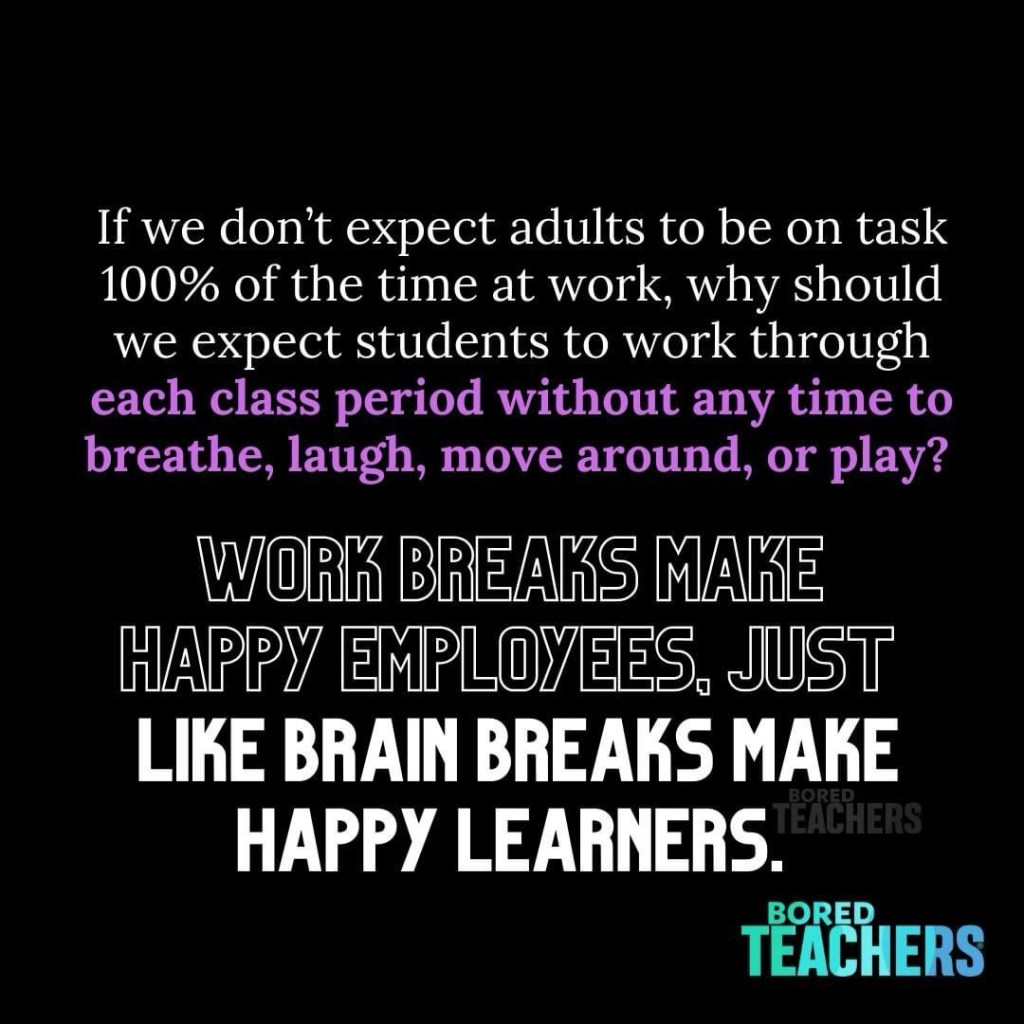
In the education world, teachers have been utilizing brain breaks more frequently and consistently. Classrooms are physically, emotionally, socially, and mentally demanding places. Teachers who provide purposeful breaks during class have fewer behavior issues and better performing students. Let’s face it – adults take breaks at work and some regulations require employee breaks, so it stands to reason that kids need breaks just as badly as, if not worse than, adults do.
So, what is a brain break? Technically speaking, brain breaks are intentional, evidence-based activities used as interventions to target the mind-body connection to improve our ability to regulate our nervous system. Simply put, brain breaks are activities we intentionally use to reset ourselves while taking a break from tasks that require a great deal of mental energy. Brain breaks can be used to energize, focus, or calm and reduce stress.
One of my most favorite strategies to use with clients during my days as a school-based mental health counselor was bi-lateral brain breaks. The data and research are clear: if we engage in an activity that supports the mind-body connection, or that that uses both sides of the brain, we can regulate our nervous systems more quickly and effectively. Once you see brain breaks in action, you’ll wish you had learned about them long ago. The good news is, it’s never too late to start.
Fortunately, brain breaks work just as well for parents and kids outside of the classroom. Part of my work as a parenting consultant is equipping parents to self-regulate so they can co-regulate with their children… which eventually leads to their children being able to self-regulate. Brain breaks are one of the first strategies I use with clients because they are fun, easy to remember and use, and effective. And anyone can use them. Want to learn more? Schedule a session and let me know that you want to focus on brain breaks.
When you’re ready to schedule an individual, parenting, or group consultation, reach out. The first consultation is free of charge to make sure we are a good fit and is available online or in person. Or, schedule a Reiki healing session or chakra reading. All B Connecting, LLC services are confidential and judgment free.
 B Connecting, LLC