~ Bailey Shawley, M.Ed, CCTS-F, Specialized Parenting & Educational Consultant
Don’t worry, be happy. If only it were that simple! There is a lot of talk about how to be happy, from being more positive to simply deciding to be happy. Undoubtedly, there are benefits of avoiding negativity and focusing on happiness. But at the end of the day, saying we are going to be happy and looking for happiness may not get us anywhere if we aren’t sure how to do it.
Happiness itself is difficult to describe. We know it when we feel it, and we recognize it in people’s behaviors and on their faces. We also know when we don’t feel happy and when others look unhappy. But, is it as simple as a smile versus a frown? What exactly does it mean to be happy? How do you describe it?
Parents say that they just want their kids to be happy. That’s understandable, since life is much easier when our kids are happy. But, it isn’t realistic to be happy all the time or to expect anyone else to be, either. Humans experience a range of emotions, and those emotions are influenced by our environment, our health, other people, and so many other things outside our control. It’s easy to forget that happiness is an emotion just like all the others because we value it so highly. Often, we struggle to recognize that all emotions are valid and that no emotion is “bad.” In fact, negative emotions serve a very important purpose of indicating that things are not right. When managed correctly, negative emotions pass and we start feeling more like ourselves. And for some people, that means feeling more happy.
We pursue happiness because it feels good. We like being happy. We are happy when other people are happy. So, it’s helpful to gain a better understanding of happiness. First, it’s important to know that we feel happy because of our happiness chemicals: dopamine, oxytocin, endorphin, and serotonin. You may have heard some people refer to them as our “feel good hormones.”
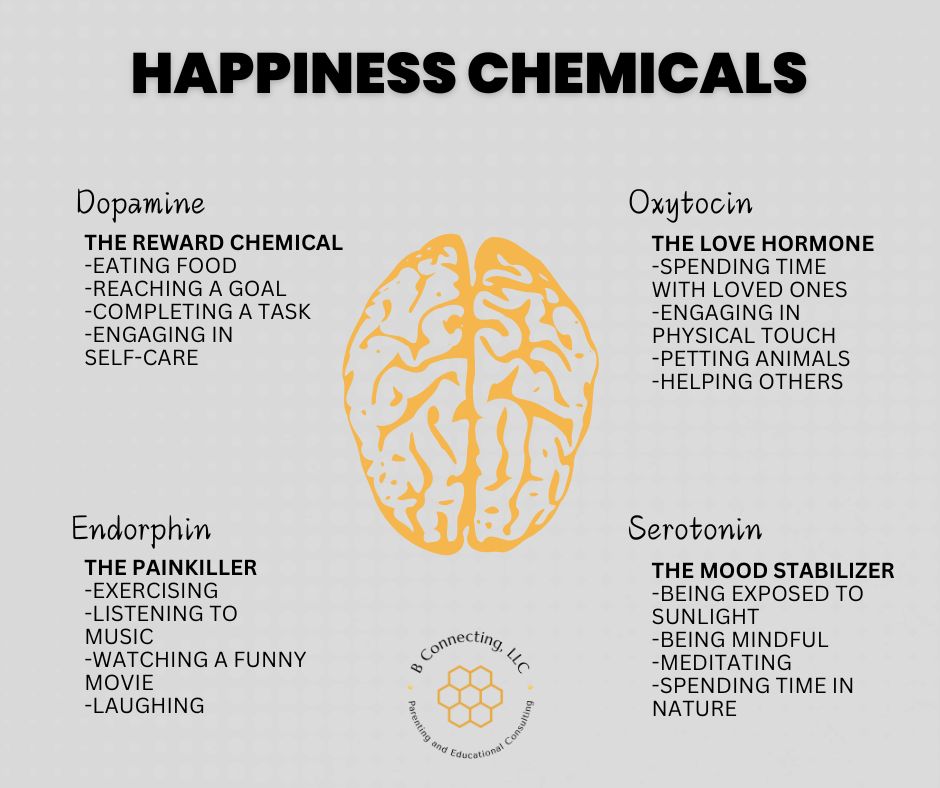
- Dopamine is our reward chemical, and it enables motivation and learning and gives us determination to complete goals. Our bodies release dopamine when we eat food, achieve a goal, complete a task, engage in self-care activities, and celebrate small wins.
- Oxytocin in our love chemical, and it releases when we do something kind. Our brains release oxytocin when we engage in safe physical touch, pet animals, help others, give a compliment, complete an act of kindness, and spend time with loved ones.
- Endorphin is our painkiller chemical, and it helps reduce stress. We release endorphins when we exercise, listen to music, eat chocolate, watch a funny movie, and laugh.
- Serotonin is our mood stabilizing chemical that plays a vital role in feeling happy. We release serotonin when we take walks, are in the sun, utilize mindfulness, meditate, and spend time in nature.
In writing this blog post and creating the images, I chuckled when I realized that I had included self-care under dopamine because all of the activities involved in releasing our happiness chemicals are examples of self-care. Truthfully, self-care has become an untamed beast in our culture: people say they need to do it, employers suggest people engage in more of it when morale gets low, and the beauty industry has claimed it as their invention. Those of us in the mental health world know that self-care is critical to overall well-being and that it’s more than just a buzzword. In my consulting work, I tell people that anything they do that is good for themselves and that they enjoy is a form of self-care.
The key is engaging in activities that release happiness chemicals while being mindful. People get excited when they hear that they can go to parties and eat food in their pursuit of happiness, but if they stay out too late, indulge in too many adult beverages, or eat too much unhealthy food, the activities no longer serve a positive purpose. Similarly, frequently missing work or school to stay home and play video games, read, or binge true crime all day will have consequences. It’s important to remember that we need to engage in activities that make us happy in moderation. And, that’s why we have to realize that pursuing happiness should not be our primary goal. Rather, taking care of ourselves, remaining accountable, and working our way through all of our emotions in healthy ways should be our target.
We still have to get enough sleep, go to work, take care of our hygiene, clean and do laundry, cook and do dishes. We still have to engage in our daily lives and accept that not everything we do will make us happy. Being happy all the time isn’t a realistic expectation. And it’s not fair to tell people to smile or be happy because their other emotions matter, too. But, if we temper the things that we have to do with the things that we want to do, honor all of our emotions, and engage in intentional self-care activities, we will be okay more of the time. We just may be happier more often, too.
If you aren’t sure how to find your happy or how to make time for self-care or yourself, reach out to schedule an initial consultation. The first one is free of charge so we can see if we are a good fit for one another. I also provide Reiki healing sessions and chakra readings that can help release your happiness chemicals and reveal where your emotional blockages are. All B Connecting, LLC services are confidential and judgment free.

 B Connecting, LLC