~ Bailey Shawley, M.Ed, CCTS-F, Specialized Parenting & Educational Consultant
My family are avid baseball fans, even when our team lets us down year after year… after year. We have taught our kids not to be fair-weather fans, to stick with the team through the ups and downs, and not to leave a game early or turn off a game before it’s over. While part of that is loyalty to the team and being true fans, the larger part of the lesson is that we support people who do their best, and we do not turn our backs on them just because they aren’t successful. We cheer on their progress even if they fall short of the overall goal. We encourage them to keep trying, to not give up or quit. We show them that we appreciate them even when they lose.

But, then we saw the game in which a father missed a foul ball hit by a star player. The younger son appeared to handle it well, the wife attempted to console the children, and the father looked frustrated and embarrassed but did not lose his cool or react inappropriately. The older son, however, was so upset that he hit his father with a closed fist while yelling, “You missed it!” He also burst into tears and allowed his mother to console him. Before the game ended, an usher gave the family a ball, and the older son did not appear to share it with his younger brother. The older son then ran up the stadium stairs to give the usher a hug of thanks. People had a lot to say about the incident; comments ranged from the son should not have been rewarded for hitting his father, to the parents don’t know how to parent, to the usher’s actions are why we love baseball.
My occupational hazard is seeing incidents like this and analyzing them from a mental health and family dynamic point of view. What I saw was a boy struggling to manage his disappointment in his father’s lack of success; he reacted with some aggression and verbal expression because his anger took over, and then he melted down into tears because sadness was the true, underlying emotion. I also saw the mother get eye-to-eye with him, talk into his ear so he could hear her in a very loud environment, and offer physical touch to console her son. The mother parented exactly as I would have advised her to, in that moment. She took the time to focus on the son who needed her help, and she did not lecture him when he needed a hug. She helped her son regulate his emotions in the moment, and that was not the moment to yell at him or correct him because he was too dysregulated for anything other than empathy to get through to him. And, these parents must be doing something right because the boy then ran to thank and hug the usher.
My hope is that the story continued when the family got home and no longer were on live television. In fact, my real hope is that they allowed the boys to get a good night’s sleep and then talked to the older son the next morning. I hope both parents sat down with him and asked him to tell them what he had felt when his dad missed the ball and what he will do differently the next time he feels those emotions. I hope they walked him through the validity of his disappointment and then guided him through discussing that while it is okay to be angry and disappointed and frustrated, it is not okay to express negative emotions in a way that hurts himself or anyone else. We don’t hit people when we are upset. I hope he apologized to his dad. I also hope that he shared the ball with his brother.
Kids won’t always make the team, get the coveted part in the play, or get a submission into an art or writing contest. They won’t always ace a test, beat their record, or get first place. They won’t always be included by or accepted by everyone. They won’t always get it right the first time, or even the tenth time. They won’t always succeed. They won’t always get what they want.
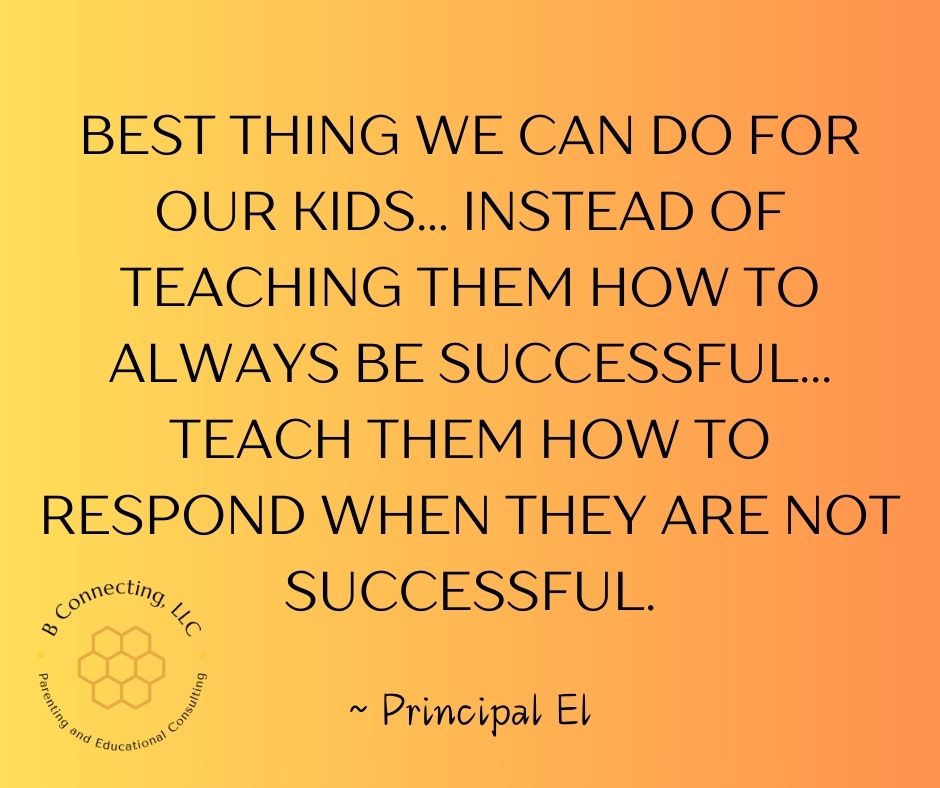
As parents, we need to coach them through the unsuccessful times even more than the successful times. They need to be able to handle the disappointment, loss, anger, frustration, and letdown in healthy ways. And that begins with co-regulating emotions like that mother at the baseball game did for her son. Yelling at him and correcting him in that moment would have been her emotional reaction, and heightened emotional reactions to children never are helpful. She gave him what he needed – love, support, and understanding – and she showed him that it was okay while remaining calm.
We also need to talk to our kids and help them find the lessons that are to be learned when they are unsuccessful. A mindset of you either win or you learn goes a long way in helping kids deal with negative emotions and disappointment. We should teach them to use positive thinking in seeking and understanding the lesson and in knowing that there’s always an opportunity to do better, try again, and keep going. Learning to deal with it is tough, but parents can choose the right ways to help their kids, like that mother did.
If you and/or your children struggle to deal with tough times, if you struggle with co-regulating with your children, or if you aren’t sure how to help them through negative emotions, reach out to schedule a consultation. The first one is free to make sure we are a good fit for one another, and all B Connecting, LLC services are confidential and judgment free. Or, schedule a half-hour or full-hour Reiki healing session. In addition to daytime hours, I have limited evening and weekend hours available.

 B Connecting, LLC