~Bailey Shawley, M.Ed, CCTS-F, Specialized Parenting & Educational Consultant
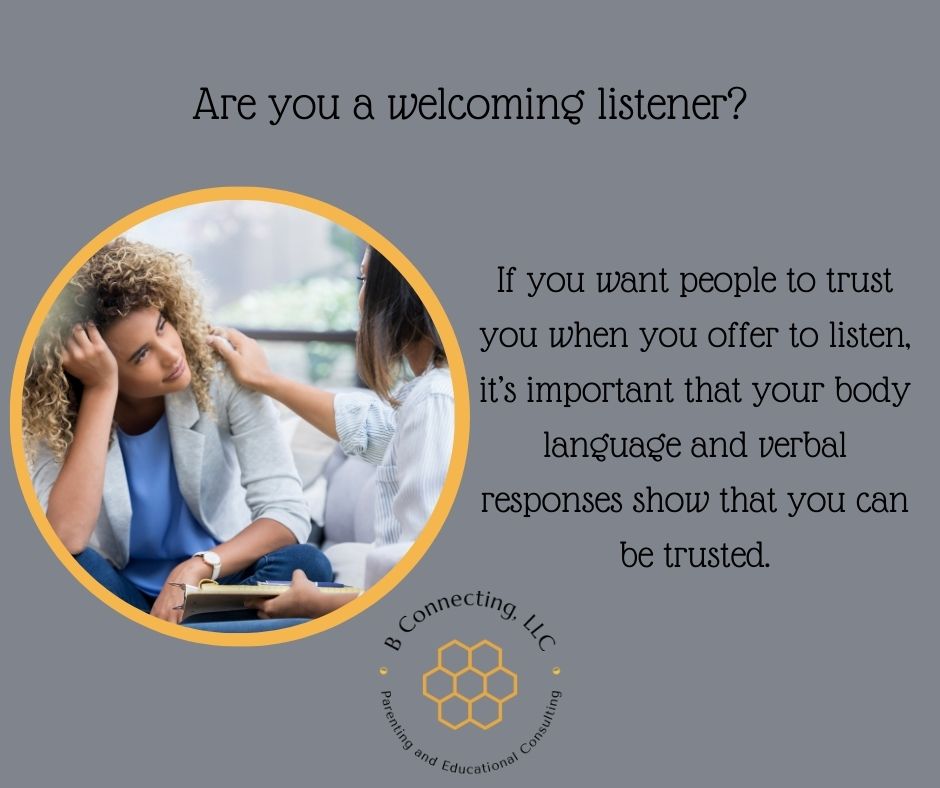
Do you have a friend or colleague who encourages you to share things with them, but once you have told them everything, they react in a way that makes you wish you hadn’t? They may be judgmental. They may be critical. They may be dismissive. They may say, “Wow,” and walk away. They may tell you why everything that you’re going through is nothing compared to what they’ve been through. They may try to relate to everything you just said and somehow make it more about themselves than about you.
Now, think about how you react when your kids tell you something that you weren’t expecting. Are you a welcoming listener? Or are you like that friend or colleague that you never want to confide in again? As parents, teachers, and coaches, we spend a great deal of time building relationships with young people. We tell them that they can tell us anything. We tell them that they need to be able to tell us the “big stuff” and not just the “little stuff.” But, do you show those kids that you really mean it and that they can trust you when you invite them to confide in you? Or, do you react immediately and cause them to become defensive and shut down? And even if you don’t say anything right away, is your reaction written all over your face?
Kids are vulnerable when they tell us difficult things; they have to work up the courage to tell us, and many of them have to work through anxiety and fear for days before they utter a word to us. Some prefer to text us instead of tell us to our faces because it feels safer for them to do so. (You may be surprised by how many teens and adolescent have drafts of texts that they are trying to work up the courage to send to parents.) Kids also come into those difficult discussions feeling on edge and being hypersensitive. They look for verbal and non-verbal cues to see if they are being heard and valued. If you don’t know how to be a welcoming listener, that child will not communicate with you. Unfortunately, they may not feel safe enough to share with anyone again for a very long time.
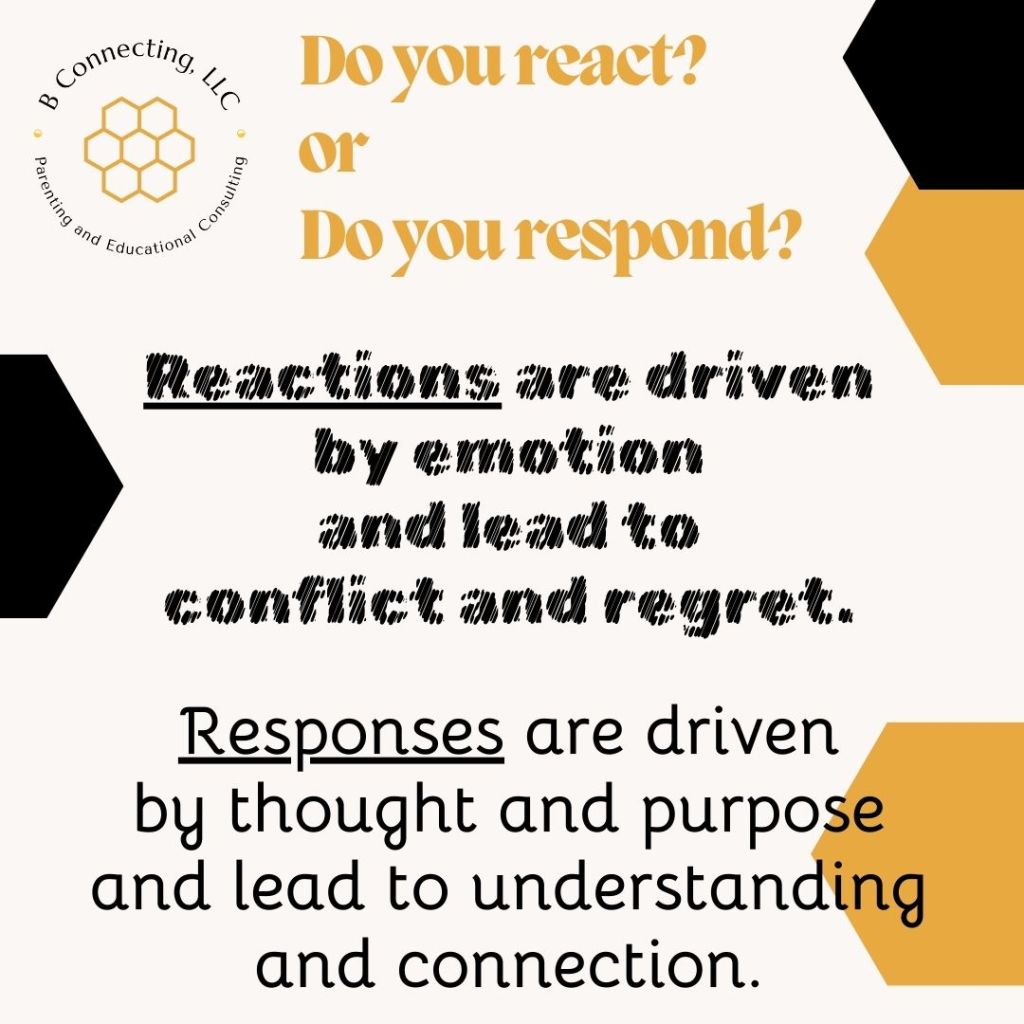
If that sounds like a lot of pressure on us as adults, you’re right. But that’s also why we are the adults. We are supposed to be able to take it all in, respond appropriately, and help the kids who confide in us. The first step is to pause and breathe so that you can respond appropriately instead of reacting immediately. That space between the young person’s words and your words also prompts you to remember to tell them how glad you are that they came to you. You will use the brief pause and reassuring words as additional time for considering what you want to say and how to say it because you want that young person to know that you are a safe, trusted listener and they can keep that line of communication open with you. You will be the welcoming listener they were hoping to find.
To be an even more welcoming listener, get eye-to-eye with young people who want to talk with you. Put away your phone, turn off the television, and listen when they want to talk. Be an active, fully engaged listener for the small things and the big things. It’s also helpful to ask adolescents and teens if they want a listening ear or advice. Sometimes, they just need to get it out but aren’t looking for a solution in return. Patient, supportive, caring listeners are needed in these cases.
However, if nobody took your feelings or concerns seriously when you were a child, you may struggle with being a welcoming listener for young people now. It can be uncomfortable, at best, and terrifying, at worst, to have a child confide in you. That’s why, in addition to guiding clients through communication skills, I also work with them on how to be there for kids in the ways that they wish someone had been there for them when they were young. That work often involves doing inner child and trauma work, too. Fortunately, healing and growth lead to enhanced communication, stronger connections, and increased comprehension. It’s never too late to become a welcoming listener.
If you struggle with being a welcoming listener, reach out to schedule a consultation. I meet with people ages 5 and up for individual consultations, and I also work with parents and families in group consultations to guide everyone through using the communication skills learned in individual consultations. You can expect to receive support and be held accountable when working with me, and all B Connecting services are confidential and judgment free. Or, if you are carrying negative energy or struggle to relax because you are a welcoming listener, consider scheduling a Reiki healing session or chakra reading.

 B Connecting, LLC