~ Bailey Shawley, M.Ed, CCTS-F, Specialized Parenting & Educational Consultant
I’ve helped countless clients through grief and loss. I’ve always said helping children through grief is the part of my job that I most dread. Now, I’m guiding our sons through it while also being in the throes of grief myself. We have lost two cherished family members in the past 3.5 months, the most recent being our Nana, my maternal grandmother. We have lost loved ones before, but the boys were not quite old enough to experience the full impact of grief. Now that they are, I wish they weren’t.
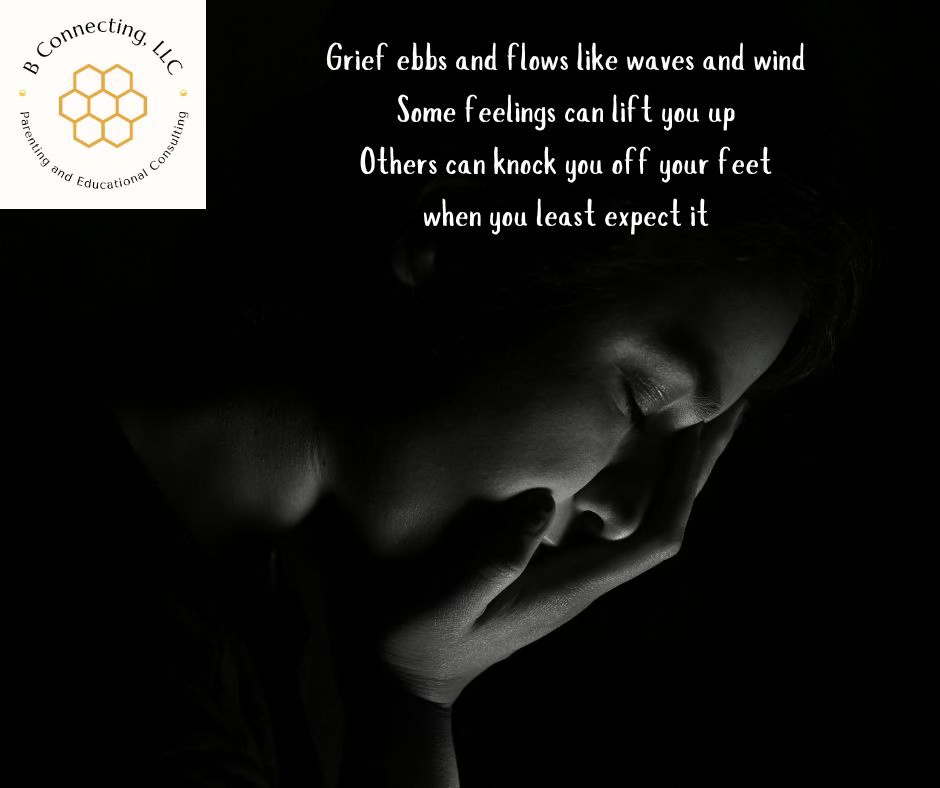
It is very difficult to explain grief, especially to young people. I rely on using waves and wind as metaphors to help them understand how grief ebbs and flows and brings with it some feelings that can lift you up and others that can knock you off your feet when you least expect it. Unfortunately, most kids also worry so much about how the adults around them are doing and feeling that they push their own emotions aside or mask them until they become too strong to bear and come out as temper tantrums or full-blown hysterics.
I’ve written before about how important it is to allow kids to cry and to see the adults in their lives cry. I still whole-heartedly believe that, even though it is difficult to know that our tears make our kids worry a little more. I also recently wrote about spending time with friends rather than isolating when times get tough and letting your friends support you when you need it. When we allow our kids to see us release feelings in healthy ways like crying, reaching out to others for support, and leaning on friends and loved ones, we show them that we can move through our feelings by helping ourselves and allowing others to help us, and that it is good and healthy to do so. They realize that they, too, can cry and do not have to hide their feelings or be afraid of them or ashamed of them.
It also is challenging to accept that it is okay to be angry after losing a loved one. Anger is a part of the stages of grief, and it’s something that we naturally experience as part of the process. But, I’ve worked with clients who feel guilt and shame about their anger, and it takes a long time to help them process those feelings while also processing their anger and grief. The more we learn about the grieving process and help our children understand it, the less likely they are to be hard on themselves about the negative emotions that arise from grief.
The other difficult thing to accept about grief is that everyone grieves differently. There really isn’t a wrong way to grieve, other than avoiding your emotions and failing to process them. Sadly, some people get so caught up in the things that need to be done after losing a loved one that they allow the busyness to take over and then get gobsmacked as soon as the services end and everyone goes home and there’s nothing left to do. I strongly urge you to take breaks, talk to loved ones, and delegate in the midst of the busyness. Cry together. Tell stories together. Go through photos together. Get involved with a grief support group. But don’t grieve alone. And don’t avoid your feelings until it’s too late and they come out in unhealthy ways.
Losing loved ones never gets easier, no matter how old we grow or how many times we have been through it. It’s okay to not be okay, as long as you recognize it and ask for help. Grief just sucks. I have been leaning on my husband and my friends. I have been writing and talking and reflecting. I have been crying – a lot. I have been listening to music and looking at photos. I have been carrying on with the holiday shopping and preparations that Nana would have wanted us to do. I have been angry and cursing. But, I also have been sharing stories with our children and showing them that we will get through this together. And I know that we will. We just need some time.
If you are struggling with grief and managing your emotions, please seek support. There are grief support groups and bereavement support groups that meet virtually and in person; if you are local to my area in Clinton County, PA, you can find support from Community Grief Support. If you are in crisis, please dial 988 or safely go to your nearest emergency room.

 B Connecting, LLC