~Bailey Shawley, M.Ed, CCTS-F, Specialized Parenting & Educational Consultant
I have been in several social situations in recent weeks, and I have overheard a lot of conversations. The ones that I heard repeatedly were parents stressing about busy schedules and the holidays, parents concerned about their children’s behaviors, and kids counting how many days of school remain until Christmas break. None of these conversations surprised me, given the nature of the events I had attended and the time of year that we are in. But, I was very surprised and saddened by how many self-deprecating statements I heard people make while talking to others. It led me to wonder how many of us consider how we talk to ourselves.

Our thoughts are difficult enough to manage without adding negative self-talk to them. But, when we talk to ourselves critically or make toxic and negative statements about ourselves, we are doing more than a disservice to ourselves. We are bullying ourselves, damaging our self-worth and self-esteem, and convincing ourselves that we are not good enough. It’s bad enough when we verbalize those statements to others. But, we have to think it in order to say it, and it is when that internal monologue frequently is self-deprecating that we especially should be concerned and take steps to correct it.
Not everyone has an internal monologue, or that voice inside our head. For those of us with the inner voice, it is difficult to imagine someone not having it. And, vice versa. Of course, we all will be critical of ourselves from time to time, and it is important to recognize when we slack off, let others down, or make a mistake. Whether we actually hear our own voice while having those thoughts is inconsequential: we all have inner thoughts, and if those thoughts about ourselves often are unhealthy and negative, we need to do something about it. Our inner thoughts may become self-critical if we have depression or anxiety or experience increased stress. We also may be more self-critical if we were raised in a negative environment, have a perfectionist trauma response, or have toxic friends or partners. One of the most common topics of negative self-talk is our appearance. But, we may also be critical when reflecting on our work performance, social interactions, family connections, skills and abilities, and so on.
The first step in addressing negative self-talk is being mindful of how we think about – and perhaps talk to – ourselves. If you find yourself always finding your flaws, never wanting to look in a mirror, or constantly telling yourself that you didn’t do something right, then it is time to take action. One strategy to try is focusing on being more positive when thinking and talking about yourself. You will combat negative thoughts by looking at things more positively: “My hair is okay, and I look amazing in this outfit,” “I am learning to do something brand new and I will get better each time I try,” or “I had 20% to give today and I gave 20%, so I gave 100% of what I could.” It will take time to develop the practice, but the more you engage in positive self-talk, the more natural it will become and the less you will engage in negative self-talk.
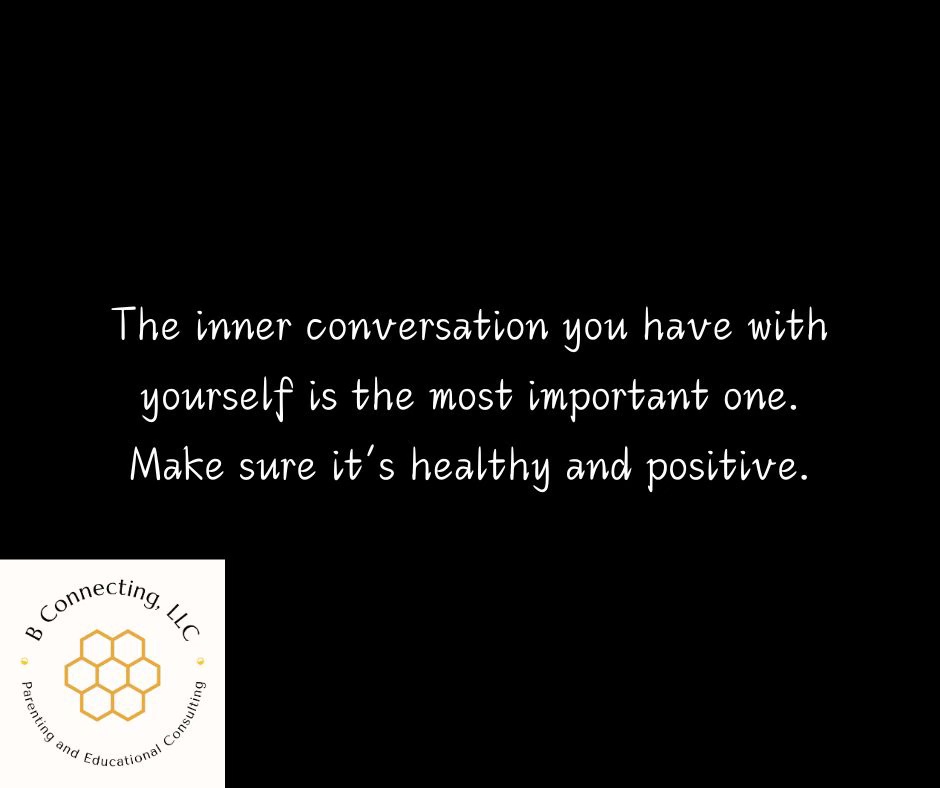
Another option is to consider how you talk to your friends. If you would not say to a friend what you are saying to yourself, then stop saying it. You need to be your own best friend – after all, with whom do you spend more time than yourself – and that includes treating yourself as well as you would your best friend. You would never look at your bestie and tell her that she never does anything right and should not even try, so do not say it to yourself. It’s also a great strategy to try to be your own best cheerleader and root for yourself, as well.
If you’re a parent, you may also have success in thinking about what you would say to your child if you heard them making self-deprecating statements the way that you do. We don’t want our children putting themselves down; in fact, we work very hard to build them up and teach them how to do the same for themselves. It’s time we start doing that just as often for ourselves. We also don’t want to model self-critical statements for our children, or they will repeat the unhealthy patterns of self-talk that you exhibit. You could consider teaching your child a positive mantra such as, “I am kind. I am deserving. I am strong,” and repeat it with them in front of a mirror at bedtime or before starting your day. It’s also a powerful practice to develop your own mantra.
If you continue to struggle with self-deprecating thoughts, consider seeing a professional like a licensed counselor, social worker, or specialized consultant like myself. I will teach you strategies and tools for engaging in more positive self-talk and working through any mental health challenges or trauma that you may have. We also can utilize cognitive-behavioral strategies to help you turn your negative thoughts into positive ones more consistently. I also guide clients through implementing journaling and mindfulness strategies to help them utilize positive self-talk, improve self-esteem, and boost confidence.
It’s time to be able to say to yourself, “Don’t talk to me like that.” You deserve better.
If your thoughts turn to self-harm in any way, seek help from a mental health professional immediately. If you are struggling with suicidal thoughts, make your way safely to a local emergency room or dial 988.
If you are concerned about being overly self-critical or struggle to find any positives about yourself, reach out to schedule a consultation. I also offer chakra readings and Reiki healing sessions so that you can engage in more self-reflection and self-healing. All B Connecting, LLC services are confidential and judgment free.
 B Connecting, LLC