~Bailey Shawley, M.Ed, CCTS-F, Specialized Parenting & Educational Consultant
My colleagues and I all are parents, and our kids cover a broad age range. So, when we get together and talk about our joys of parenting, we cover everything from college applications to breastfeeding. We also talk about the challenges of raising children with partners who were raised differently than we were, and about the ways in which our parents treat our children vastly differently than they treated us when we were children. This week, the conversation took a bit of a detour as we talked about how different parenting must have been for our parents and our grandparents. We all know that our parents loved us and that their parents loved them, but we when we compared our current parenting styles to our parents’ styles, we were at times shocked and other times humored by just how starkly different they are.
I subscribe to the belief that when we know better, we do better. I openly talk about how I would have parented my children differently had I been trained in mental health earlier in life. I know that I made many mistakes, and I have made peace with that knowledge because I did do better when I knew how to do so. That’s also the reason that I offer specialized parenting consulting at B Connecting, LLC: I want to help parents learn and understand how to be the best parents they can be, since I did not have that opportunity when I was a new parent. And our kids deserve to have us at our best as often as possible.
What I’ve really found interesting in my specialized parenting consultant role is that some parents rely on parenting the way their parents did because “I turned out okay.” In reality, though, we are not parenting the same types of kids that our parents raised. Societal pressures, social media, cyberbullying, the pandemic and its long-lasting effects, increased school violence and school shootings, earlier puberty, and the mental health crisis make kids in 2025 different from kids just a few years ago – and vastly different from the types of kids we were. If the world changes and technology changes and medicine changes and education changes and youth changes, then parenting needs to change too.
The funny thing is that almost every parent I have talked to, from brand new parents to aging grandparents, say they really didn’t/don’t know what they were/are doing as parents. Everyone laments the fact that the hospital does not send us home with manuals for our newborns. Sure, we read the books and talk with our doctors and pediatricians, but once you take that new bundle of joy home, you are on your own. And it’s scary, to put it mildly. The morning news shows and talk shows and podcasts make us think that the latest parenting style is the way to go. But, just in my lifetime, we’ve had tiger parents, helicopter parents, lighthouse parents, lawnmower parents, and on and on and on. So, which way really is the way?
Well, the days of authoritarian parenting should be long gone. We know that kids need to be seen and heard because their mental health is critical to their overall wellbeing, development, and growth. We also know that parenting with little warmth, frequent punishments, iron fists, and control leads to kids being insecure, stressed, hostile, and aggressive as adults. They’re also more likely to resort to substance abuse because they don’t know how to manage their emotions; they often self-medicate in an attempt to manage their depression and anxiety.
The days of permissive parenting also should be over. Permissive parenting is characterized by unclear and inconsistent boundaries, lack of discipline, over-indulged emotions, and lack of control. Kids need routine, structure, and boundaries, and permissive parenting is too flexible and indulgent to help kids learn to self-regulate. And, adults who are products of permissive parenting also tend to be entitled, low academic achievers, impulsive, aggressive, and deficient in empathy.
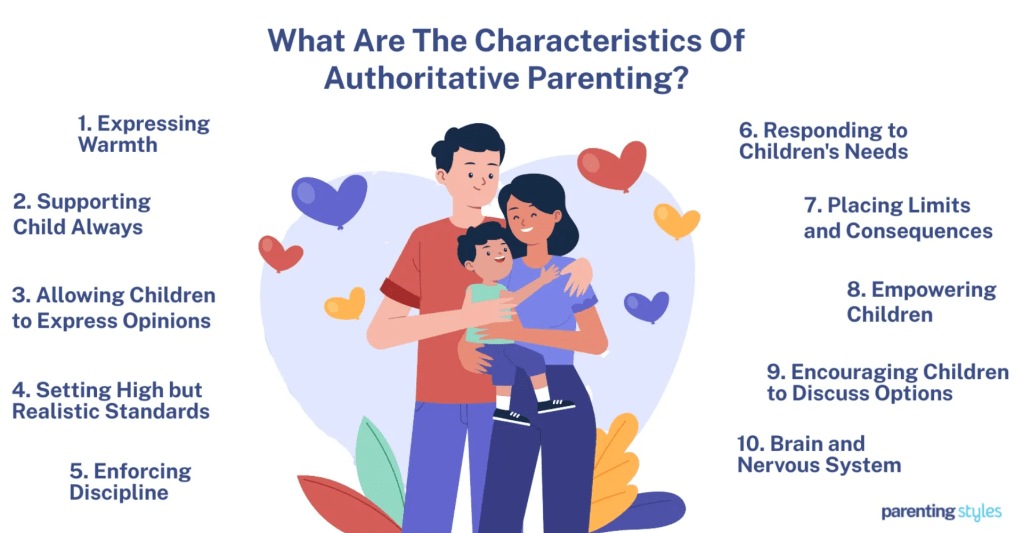
A blend of authoritative (Note: authoritative is very different from authoritarian parenting) and conscious parenting is the style that I guide my clients toward understanding, accepting, and utilizing. Authoritative/conscious parents set clear boundaries and expectations, communicate openly with their children, offer guidance and support while encouraging their children to be independent, and respond appropriately to their child’s needs. These parents provide high levels of warmth and nurturing and are consistent and reliable in their interactions and communication with their children. This type of parenting also features setting age-appropriate expectations and consequences, modeling self-regulation and self-reflection, and awareness. Kids with of authoritative/conscious parents generally are content, have high levels of self-esteem, and demonstrate assertiveness. They know how to regulate and manage their emotions, have higher levels of empathy, are resilient, and do well in school and in the community.
Our first son was barely one week old when one of my most favorite doctors told me that the best parenting is done with love. I was so worried about getting everything right that the doctor made it a point to tell me that I couldn’t get it wrong as long as I loved my child. Those words got me through the endless nights, anxiety about doing it wrong, feeding difficulties, and everything else that life with a newborn entails. I’ve been a mother for 15.5 years, and those words continue to get me through all the new challenges that parenting a teen and tween throw at me on a daily basis. As long as you love them, you’re on the right parenting path.
Loving our kids takes time, effort, and energy. And, parenting our kids to the best of our ability requires understanding how to use the most effective parenting style. I’d love to guide you through the process when you’re ready to get started. You can schedule a consultation by clicking the button below. The initial consultation is free of charge to ensure we are a good fit for one another, and it is available online or in person.
 B Connecting, LLC