~ Bailey Shawley, M.Ed, CCTS-F, Specialized Parenting & Educational Consultant
Allow me to begin by acknowledging that not everyone has that little voice inside their head. I’ve been reading more and more about people’s inner monologue because I’m fascinated by the fact that some people do not have one, some people hear their own voice when they think, and some people hear a different voice when they think. And there’s lots of other ways in which people think and process, too. It’s very important to note here that inner monologue – hearing that voice – is not a mental health disorder or illness. It’s a function of thought. There are mental health disorders associated with hearing voices, and that is not what I address in this post.
Most of my dear friends and family members have inner monologues. And, unfortunately, most of our inner monologues are anxious, critical voices… which also means that many of us also struggle with intrusive thoughts. It’s kind of par for the course for those of us with anxiety and depression. These struggles are some of the main reasons that I was unable to meditate for so long. I couldn’t turn off the inner monologue, I couldn’t stop the unhelpful thoughts from coming, and I couldn’t stop ruminating on all of it. Talk about a vicious cycle.
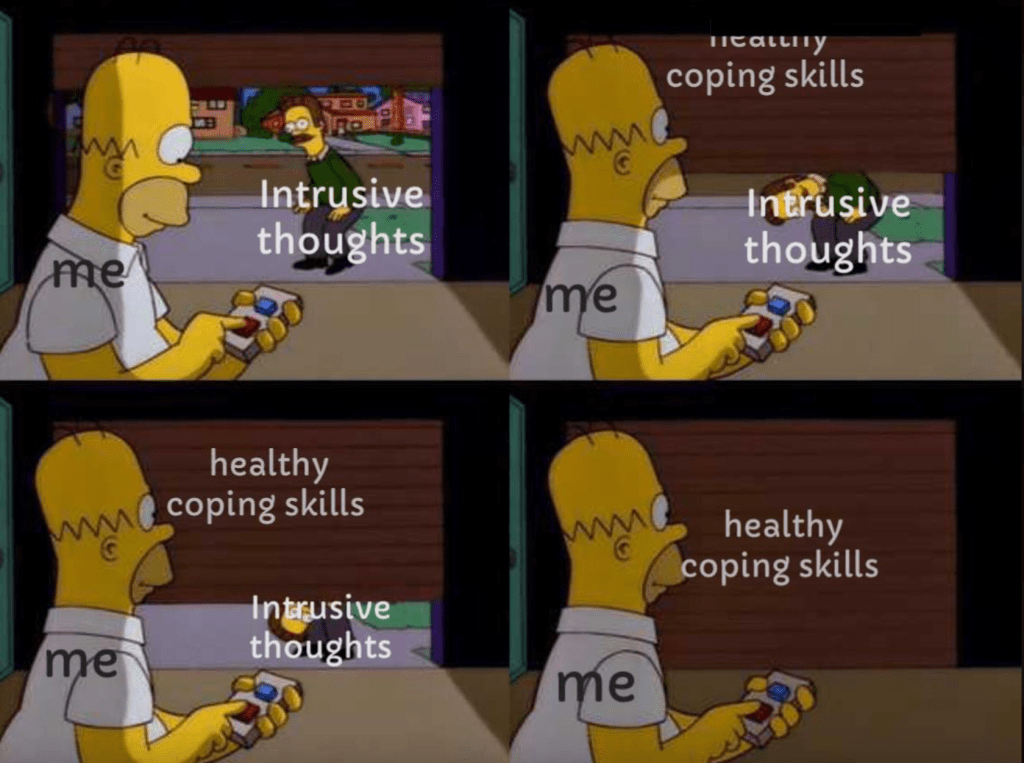
I did find some healthy coping skills that were helpful. And, with consistent practice, those skills made it much easier to manage my intrusive thoughts and that vicious cycle. I finally found the off switch for my inner monologue when I started engaging in Reiki healing. I had tried meditating, repeating a mantra, using guided visualization, engaging in progressive muscle relaxation, and just about everything else I could think of to turn off the voice. But, it wasn’t until I started practicing Reiki and participated in my first attunement that I finally succeeded in turning off the noise. I wish I could verbalize how it happened, but I can’t, other than to say that my thoughts and mind always were on, even at a much lower volume thanks to the coping skills, until I started doing Reiki, and then I suddenly could turn them off.
Don’t get me wrong. It’s very helpful for me to have inner monologue. It literally is how I think. It’s also how I proofread and edit. But, it becomes unhelpful when the voice starts blurting out intrusive thoughts when I’m trying to focus, read, or sleep. And for me, those thoughts often are self-critical and lead me down the Imposter Syndrome rabbit hole. It happens to most of my closest friends, too. That’s why I not only engage in self-Reiki but also practice Reiki healing on them, too.
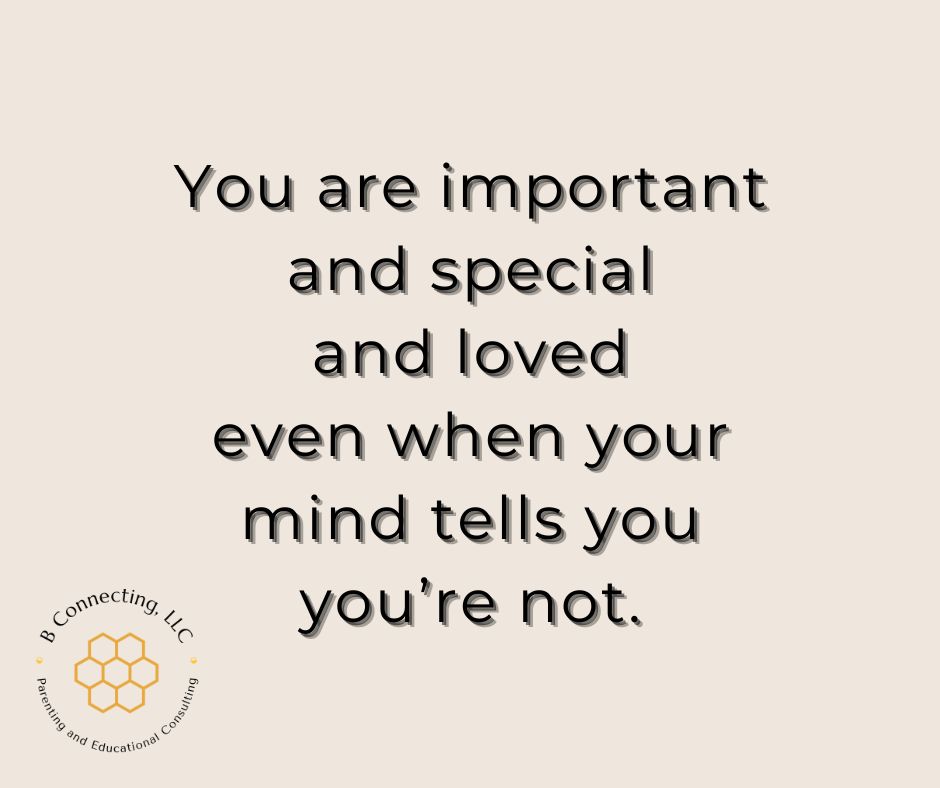
There are other ways to manage intrusive thoughts, too. Much of my work with adolescent clients struggling with intrusive thoughts focuses on helping them become mindful so they can begin dismantling the thoughts. I begin by asking them what they know to be true versus what they know to be untrue. We look at facts and visualize them in exercises together. I help them discover evidence supporting or disputing those facts. Helping clients discover how their brains and thoughts try to trick them is one of the best parts of my job because I have the privilege of helping my clients empower themselves. It’s unbelievably inspiring to see tweens and teens, especially, begin to understand that intrusive thoughts are nothing more than lies our brains make us believe. It’s also helpful to remind myself of that from time to time, too.
If you are ready to learn some healthy coping skills to better manage your inner monologue’s volume, intrusive thoughts, or Imposter Syndrome, schedule an individual consultation. Or, if you’d like to engage in a Reiki healing session to see if it helps calm the noise, schedule a half-hour or full-hour Reiki session. All B Connecting, LLC services are confidential and judgment free.

 B Connecting, LLC