~ Bailey Shawley, M.Ed, CCTS-F, Specialized Parenting & Educational Consultant

My hometown has had more than its fair share of loss in the past few weeks. Former teachers, school counselors, and coaches, young people, parents of young children, grandparents… the losses are numerous and painful for so many, especially given the tragic nature of some of them. When a small community faces a great deal of loss in a short amount of time, it can trigger people who have experienced their own recent losses or who are facing death anniversaries of loved ones. Grief is tricky in that way; it runs so closely to the surface that it takes only a slight reminder to make it feel fresh all over again.
People on the periphery of some of the recent losses have messaged me asking what they can do for the grieving families and friends. They are worried about disrespecting boundaries or making the loss harder for the people they so badly want to help. I have suggested they read the obituaries to see when and where the services will be so they can give their condolences in person and/or make donations to the designated organizations. I also reminded them that sending a sympathy card with a handwritten note is a kind way to show support and let the recipient know they care. Making a donation to a local non-profit in honor of the loved one is another kind, meaningful gesture.
People also have asked about sending food or delivering meals. A word of caution: if you do not know the family well, be very careful when sending food because you likely are unaware of dietary needs and restrictions or food allergies. And, do you know how many casseroles and pasta dishes families experiencing loss actually receive? We’ve had neighbors ask if we could use a meal after they lost a loved one because they felt guilty about food spoiling or being unable to eat one more baked ziti. I often recommend that people send gift cards for local restaurants to the family so they can order whatever they want. I also recommend prepackaged snacks or deli trays because many people don’t have large appetites when they experience a loss, and snacks and deli trays are something they can pick at when they get hungry; it’s also extremely helpful to have finger foods in the house when young relatives visit.
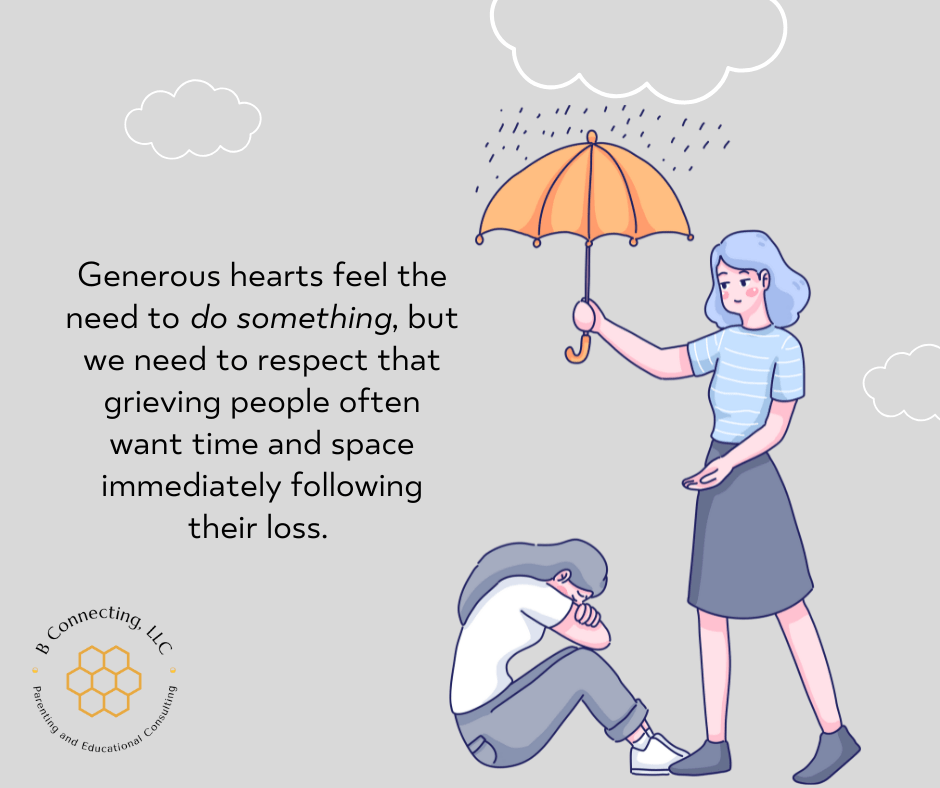
One thing to keep in mind is, it is best to approach those in the throes of grief with patience and grace. Generous hearts feel the need to do something, but we need to respect that grieving people often want time and space immediately following their loss. Respecting boundaries at a difficult time is essential. If we are not in the inner circle of the loved ones, then it is better to allow the inner circle to pull together and lean on one another at first. Then, send the card or attend the services or make the donations, but try to avoid asking people what they need when you see them. They often have no idea how to answer, and they can be overwhelmed by such an open-ended question. Instead, offer your condolences and let them know that you will be there for them when they are ready to reach out to you. Remember, the loss and grief is not about you. Don’t allow your desire to help get in the way of the grieving person’s need for time and space. Trust that they will come to you for support in due time.
Everyone grieves differently, and grief is a process; that’s why it can be difficult to know how to support others who have experienced a loss. The best plan is to keep it simple. Send a card with a handwritten note, make a donation or attend a service, and let those who grieve know that you are ready to go for a walk, meet for a coffee, pick up a grocery order, sit and listen, or do whatever they need, when they are ready. Sometimes, being patient is the best way to support those who grieve.
It can be difficult to provide care and support for others, especially when they are grieving. As a specialized consultant, I support any individual seeking professional guidance – mental health diagnoses are not required to engage in services with me. I provide a trained, listening ear and trauma-informed, evidence-based best practices to help clients navigate difficult conversations and work through emotionally-charged situations. I also help people better understand grief and the grieving process. When you are ready for support, reach out to schedule a confidential, judgment-free consultation. Initial consultations with B Connecting, LLC are free of charge to ensure we are a good fit, and they are available in person or online.