~ Bailey Shawley, MSEd, CCTS-F, Specialized Parenting & Educational Consultant
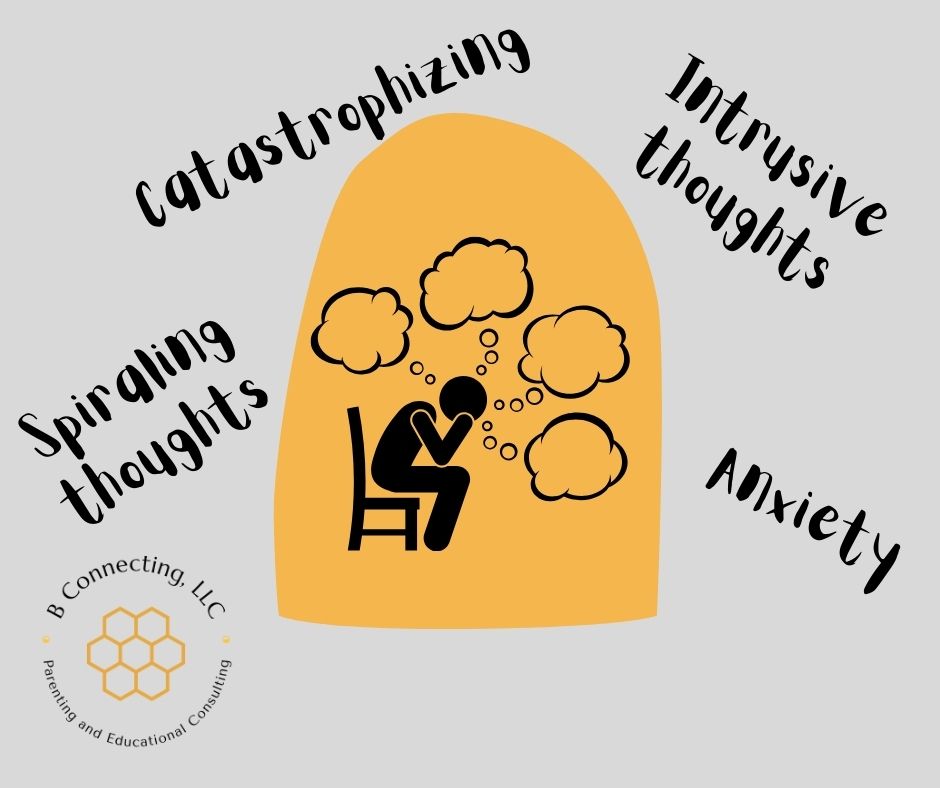
Anxiety. Intrusive thoughts. Spiraling thoughts. Catastrophizing. These topics are on my mind because I led the Understanding Anxiety Parent Social Hour this week at the Lewisburg Children’s Museum. The parents who attended asked several insightful questions, and I admired how vulnerable they allowed themselves to be while sharing their own experiences and feelings. I greatly enjoyed having the opportunity to answer their questions and share techniques for managing anxiety and strategies for implementing emotional co-regulation techniques with their children. Engaging in authentic conversation with parents is one of my favorite parts of my consulting work.
Another one of my favorite parts of this work is helping people realize that they aren’t alone. At one time or another, we all experience anxiety, even if we aren’t diagnosed with an anxiety disorder. How many times do we stay awake worrying about all of the things we need to do the next day? How many times have kids worried about what is going to happen at the doctor’s office or school tomorrow? And how many times have we looked at our significant other with relief at the end of the day because it wasn’t as bad as we thought it was going to be? And how many times have our kids smiled and said that they don’t know what they were worried about in the first place? What we need to realize is that if we stress too much about something before it happens, we put ourselves through it twice. And most of the time, we imagine things will be so much worse than they ever actually are.
The Parent Social Hour question that made all of us chuckle a little was, “Why do we do this to ourselves?” We know that the intrusive thoughts are intrusive, and we don’t want to have them. We know that the likelihood of the worst-case scenarios that we imagine happening to ourselves and our families is slim to none, yet we feel like the worst is going to happen any second. Some of us even put ourselves through the paces of figuring out what we will do when those scenarios do happen – not if they happen, but when they happen. And, we continue to do all of this time and time again.
Thankfully, increasing our mindfulness of the intrusive thoughts is something that we can do. We can recognize what is happening and then talk ourselves through it to combat the thoughts and eventually reduce them. We can show our brains that there are other ways to think and then allow ourselves to engage in more healthy, positive thinking when we are stressed. Implementing a combination of coping skills, grounding techniques, and mindfulness activities while working with a mental health professional to retrain the brain is effective. (I’m oversimplifying for the purposes of this post, but I spend a great deal of time in consulting sessions guiding people through this process.) And yes, some people are diagnosed with anxiety, and some of them use medication to assist in managing that anxiety in addition to working with mental health professionals.
So, we do this to ourselves until we learn how to stop doing this to ourselves. We also take what we learn and model it for our children to co-regulate with them until they can self-regulate. When we know better, we do better. We parents also have the power to help our kids do better, too.
When you are ready to understand more about anxiety, whether for yourself or your child, reach out to schedule a consultation. The initial consultation is free of charge to ensure we are a good fit for one another and is available in person or online. Or, if you are interested in scheduling the Understanding Anxiety Parent Social Hour for your agency, organization, or group, contact me for more information. I also provide half-hour and full-hour Reiki healing sessions to aid clients in relaxing and letting go of stress and anxiety. All B Connecting, LLC services are confidential and judgment free.