~ Bailey Shawley, MSEd, CCTS-F, Specialized Parenting & Educational Consultant

I need to talk about things. A lot. It’s how I make sense of things, and it’s how I get validation or the kick in the butt that I need in any given situation. It’s why girls’ dinners with friends last an average of 2.5 hours. It’s why when I talk on the phone with friends that I’ve only been texting for a while, I need a charger long before the conversation ends. It’s also why writing is a huge part of my life; for me, writing is just talking in written form (and that’s why my sentences sometimes go on for days, and I use parentheses and italics a lot). And it’s why I was an English teacher, then a writer, then a mental health therapist, and now a consultant. For me, talking is a way of life.
But not everyone is like me. Some of my closest friends and family members are quiet people, though they’re not all introverts. Many years ago, I put a lot of time and energy into learning that communication wasn’t just about me being able to say everything I needed to say. Communication has to be a two-way street, and just because I wanted and needed to talk about it now didn’t mean that the other person did. And, if I tried to force the conversation, it wasn’t productive because I made the other person defensive, added to their escalation, or made them feel like they had to say something even if it wasn’t really what they were feeling or what they needed to say… or wasn’t even true.
Professionally, over the past 20+ years, I have prioritized learning as much as possible about communication. I recognize when people’s anxiety makes them feel like they need to talk about things immediately, and I recognize when people need to process and cannot talk about things for some time. I help clients pick up on others’ nonverbals, too, because we communicate so much more that way than with our actual words. I encourage some clients to make notes in their phones and type out long text messages they never send, so they can work out their thoughts and feelings before having a tough conversation. I also work with couples and families who struggle because the timing issues break down communication quickly; one family member thinks that the other person doesn’t want to talk to them and gets hurt and angry, but all the other family member needed was time to prepare to talk.
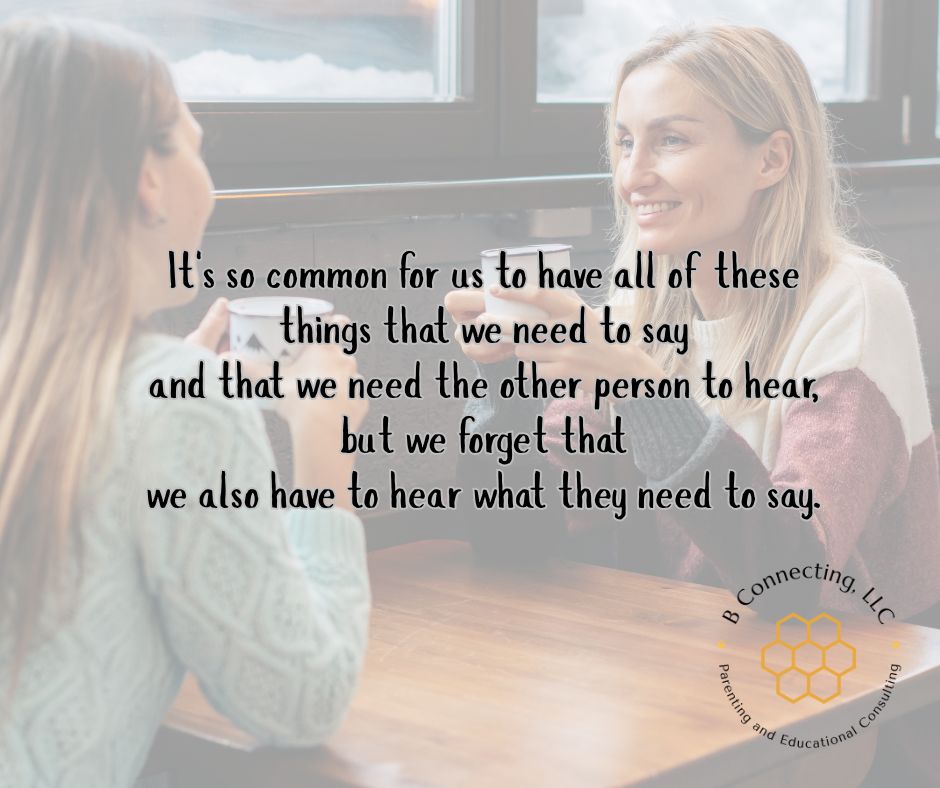
It’s not a relationship-destroying problem once people learn their loved one’s communication styles and needs, including their non-verbals. I teach some clients to use signals, either physically or verbally, to indicate when they need time to process before continuing with the conversation. I teach other clients to journal when they need to communicate immediately. I work with couples in role-play situations to practice using various communication styles while I guide and mediate. I also spend a great deal of time teaching people how to listen. It’s so common for us to have all of these things that we need to say and that we need the other person to hear, but we forget that we also have to hear what they need to say. And if we are communicating just to show the other person that we are right and they are wrong… look out.
So, yes, we need to talk about it. But, no, it doesn’t have to happen immediately if one of the people needs time to work it out for themselves first. It also doesn’t have to happen immediately if we just want to be right; in that case, we have to do a lot of work to figure out what’s really at the heart of the matter. It’s frustrating. It’s difficult to understand. It’s especially infuriating for parents who want answers from their kids and want them now. But I’ve never met anyone who communicates effectively when they’re escalated. So, if we look at the purpose of conversations as everyone gaining a better understanding of the situation and the people involved, then we should ensure that we are in the right frame of mind to have that tough talk. Nobody said this would be easy. But, we also don’t have to keep making it so hard.
When I started B Connecting, I liked the idea of using “connecting” in the business name because I wanted to emphasize that connecting to ourselves and others has to be an active, ongoing effort. I also focus on guiding people through increasing communication, enhancing comprehension, and building connection because those skills are vital to improving mental health and well-being. It is hard to learn not to talk just to talk. And it’s hard to learn how to truly listen to and hear the other person. But, regardless of our age or experiences, we can learn how to do it. I’d love to help you learn when you’re ready.
 B Connecting, LLC