~ Bailey Shawley, M.Ed, CCTS-F, Specialized Parenting & Educational Consultant
I have been hearing from teachers, parents, and coaches who say that it seems like our adolescents and teens increasingly are more angry. They worry about where the anger comes from and why the kids are so angry, which both are valid concerns. People who spend a lot of time with adolescents and teens should help them talk about what is behind their anger. First, however, we need to focus on helping them through their anger in healthy ways. It’s easier for them to verbalize their triggers once they are less angry and have regulated their emotions.

So, even though it seems to be counterintuitive, the best way to help angry adolescents and teens is to avoid asking them why they are angry and what is wrong. Those questions can lead kids to think that being angry is wrong or bad, and we need to avoid sending those messages. Rather, we need to teach our kids that all emotions are valid. Yes, it is unsettling when kids are angry a lot of the time, and they may struggle with anger on a clinical level; if they do, they should work with a mental health professional, especially if they are hurting themselves or others when they are angry. For most adolescents and teens, though, anger masks other emotions, and the anger is what raises its ugly head first. Anger is quick, and anger is easy. And adults get uncomfortable around angry kids.
To truly help an adolescent or teen who is angry, teach them what they should do with their anger. They’re already mad, so help them handle it. That means don’t tell them that they shouldn’t be mad or that you don’t understand why they are upset. Instead, suggest they exercise in healthy ways like going for a walk, a run, or a bike ride. If they are agitated and making fists or stomping their feet, tell them to throw or kick a ball. If they are getting loud, tell them to go scream into a pillow or encourage them to play their favorite song loudly and to sing it at the top of their lungs. They also could dance around while singing. If you have a punching bag and gloves, tell them to go let it out on the bag.
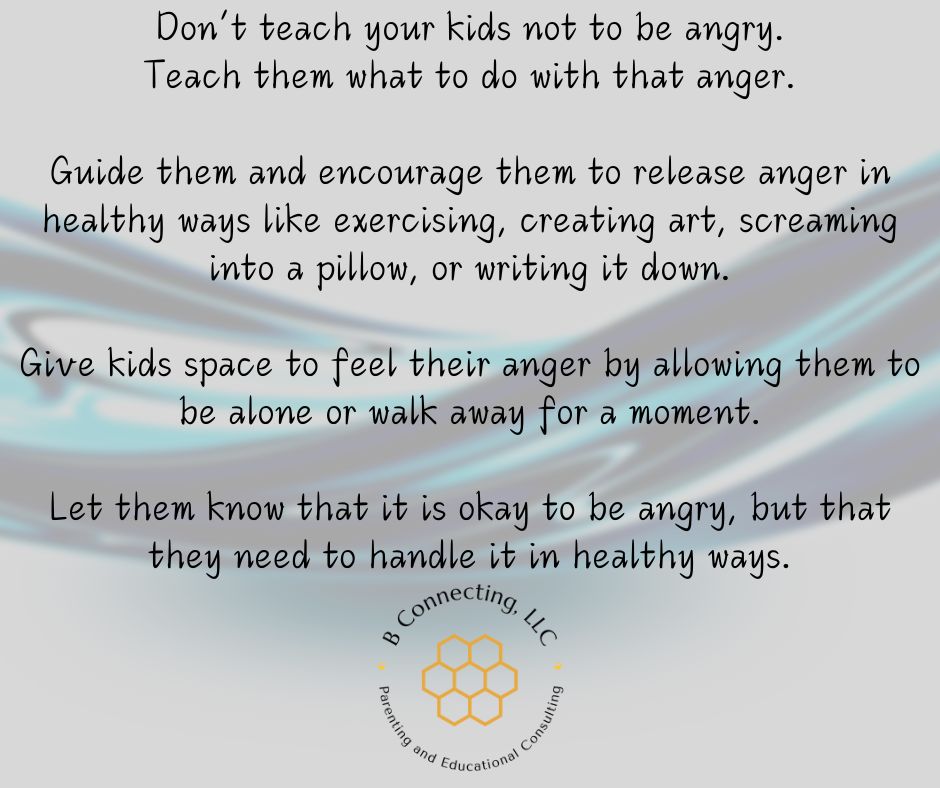
It’s also helpful to give kids some space when angry. They won’t be in a position to talk it out yet, and they may need some time to themselves to work through it. Tell them to go do a healthy activity, like the ones I mentioned, and then meet you back in the kitchen in 15 minutes to talk about it. They will know that you are not abandoning them, but that you are giving them the space and time they need to work through the anger before they have to talk to you about it. And, you’ll feel better knowing that you put a timeframe on it so you can check in with them sooner, rather than later.
Once they have engaged in the activity and returned to talk to you, let them know that you are ready to listen and help. They could become defensive and angry again, which just means they need a little more time to work through the anger before talking. (And that’s okay.) Again, encourage them to engage in a healthy activity and reconvene in a certain amount of time. Or, offer to go for a walk with them. When it is time to talk, remind them that anger is an emotion just like all of our other emotions and that they did well responding in a healthy, mindful way. Then, talk them through what happened and help them figure out the source of their anger. It’s also okay if you to listen more than talk, because being there for your child is more important than anything.
It’s difficult to guide our adolescents and teens through their emotions, especially if you never had anyone guide you when you were younger. And, you still may struggle with anger yourself from time to time. But, by letting your kids know that it is okay and natural to be angry and that they can regain control of their emotions by handling them in healthy ways, you will teach them a valuable life lesson. You may just learn something yourself.
If you aren’t sure whether your adolescent’s or teen’s anger is too severe, or if you aren’t sure how to help and support them, reach out to schedule a consultation. I also work with parents who struggle to manage their anger in healthy ways. The initial consultation is free of charge to make sure we are a good fit for one another, and all B Connecting, LLC services are confidential and judgment free. I also offer half-hour and full-hour Reiki healing sessions, which are beneficial for people struggling with negative emotions.

 B Connecting, LLC