~ Bailey Shawley, M.Ed, CCTS-F, Specialized Parenting & Educational Consultant
I got the first email about our younger son’s upcoming parent-teacher conference dates a couple of weeks ago. A lifetime ago when I was a classroom teacher, I never had a high show rate at conferences. I knew many parents worked long hours and had multiple children. I remember emailing and calling to personally invite parents of kids who were in danger of failing, not reaching their potential, or struggling with things outside the classroom. I was hopeful that the parents would respond, but many did not.

I also did not wait for conference time to reach out to parents; I emailed and left voicemail the first week of school so that my students knew I would include their parents in their education and attempt to work as a team to support them. I also didn’t wait for conference time in November to contact parents because it is an incredibly busy time of year, and I appreciated that calendars sometimes just can’t take one more appointment.
While I was teaching, though, I saw parents attending sporting events regularly. Parents showed up in droves for games and matches, but the school’s halls were nearly empty on parent-teacher conference night and open house night. Don’t get me wrong. I love being a spectator at sporting events, and especially local high school events. It’s fun to bundle up and sit with people cheering on the football team and hear the band play its heart out. It’s awesome to see kids sink their first foul shot, strive to get their first pin, and get their first extra-base hit. But, parents rarely participated in the academic side of school. There were planning meetings, curriculum nights, and meet the teacher events, and it was the same handful of parents showing up again and again.
Now that I am a parenting and educational consultant, I have the privilege of speaking with so many more parents, guardians, and caregivers. And what I’m finding isn’t that they like sports more or that they don’t want to leave their houses or change their schedules to attend academic-related meetings. The truth is, many of them would rather be anywhere other than school. Those parents in particular had terrible experiences, some even traumatic, as students themselves, so they don’t want to return to the school setting. In some cases, they would have to sit in the same classrooms or see the same teachers that they associate with those negative experiences. Still other parents feel intimidated by the educational jargon principals and teachers use and don’t feel comfortable in an academic setting. And many others don’t feel as though their concerns or their child’s needs are being met, and they don’t think that their attendance or participation will change anything.
I’m not blaming the schools or the teachers. I was a fourth-generation public school educator and the daughter of a former long-time school board member. I know the challenges our public schools face as administrations change, testing pressures increase, finances dwindle, buildings age, enrollment drops, and society as a whole devalues education while believing they know how to teach because they once sat in a classroom. But, I also know the reality of people feeling unwelcome, unwanted, and uncomfortable in a school setting. We can’t get those parents through the doors until their feelings change. So, whose job is it to make that change happen?
The answer is both. Fortunately, I have seen a few local public schools hosting family fun nights, reading nights, school carnivals, and non-traditional open houses that welcome parents to alternative locations and sometimes even onto the football field itself. Schools are using apps so that communication feels more natural through texting instead of phone calls and emails. School social workers and outreach workers meet with parents at various locations in the community so they can have a less intimidating, more helpful and honest conversation. Schools post information, events, and invitations on social media to reach more parents. Some are hosting brunches or lunches with parents during the school day in a relaxed environment to celebrate various student achievements. These schools get it. I hope others follow suit sooner, rather than later.
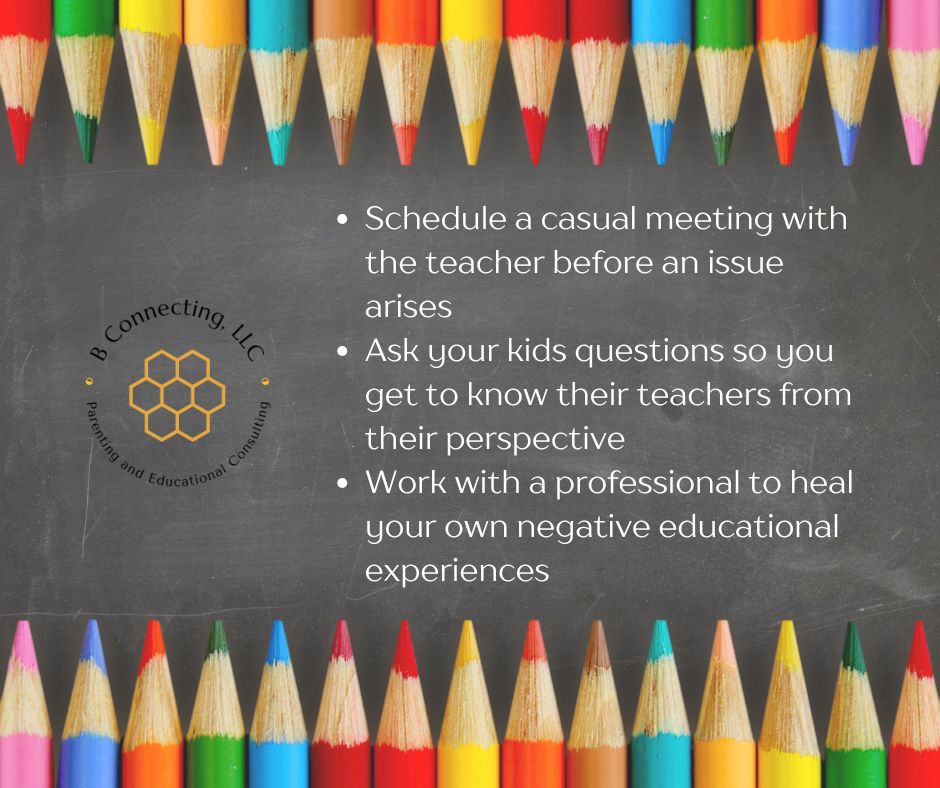
So, now it’s up to parents to figure out how to overcome their negative feelings and experiences so that they can be more involved in their children’s education. I encourage clients who don’t feel connected to their children’s teachers to send a quick note asking to meet briefly before or after school. Parents feel a little more in control of the situation when they initiate the contact and don’t wait until there is an issue to talk to the teacher or principal. I also encourage them to ask their kids what they know and like about their teachers so that they become a little more “human” to the family. I still laugh when young kids get astounded by seeing their teachers at the grocery store because they truly believe their teachers live at school… and some feel like they do because of all the work they put in to educate children. I also work individually with parents using trauma-informed, evidence-based practices and strategies to help them through the process of healing. Inner child work often is a part of that process, as well.
I’ve never met a parent who didn’t want to help their child. I’ve never met a parent who didn’t want what was best for their child. They sometimes just don’t know how to do it, and if their own experiences were negative, they are much less motivated to do so. Connecting with the right people in the school in the right way can make a real difference for parents and teachers who want to support a child’s education. Sometimes, the adults need some guidance to make that happen.
If you are struggling with participating in your child’s education, connecting with their teacher or school, or working through your own negative educational experiences or trauma, reach out to schedule an individual consultation. I also offer consulting services for teachers, educational departments, and school districts looking for evidenced-based strategies for creating trauma-informed classrooms and learning spaces.